LinguaPop
A Japanese reading app that turns real novels and news into graded study material: tokenized, colour-coded, dictionary-backed and fully offline.
- Role
- Everything: product, Flutter app, NLP pipeline
- Stack
- Flutter · Dart · Riverpod · MeCab · Hive
- Ships as
- Android app + web build
- Data
- On-device tokenizer + JMdict dictionary, no server
- 01
The problem
Learners hit a wall between textbooks and real Japanese. Native material has no furigana, no glossary, and no sense of what's at your level. The readers I found either want you to paste text into a website, or stream everything through their server.
I wanted the opposite. Import anything, an EPUB novel or today's NHK article, and read it like a proper learner's edition, entirely on your own device.
- 02
The build
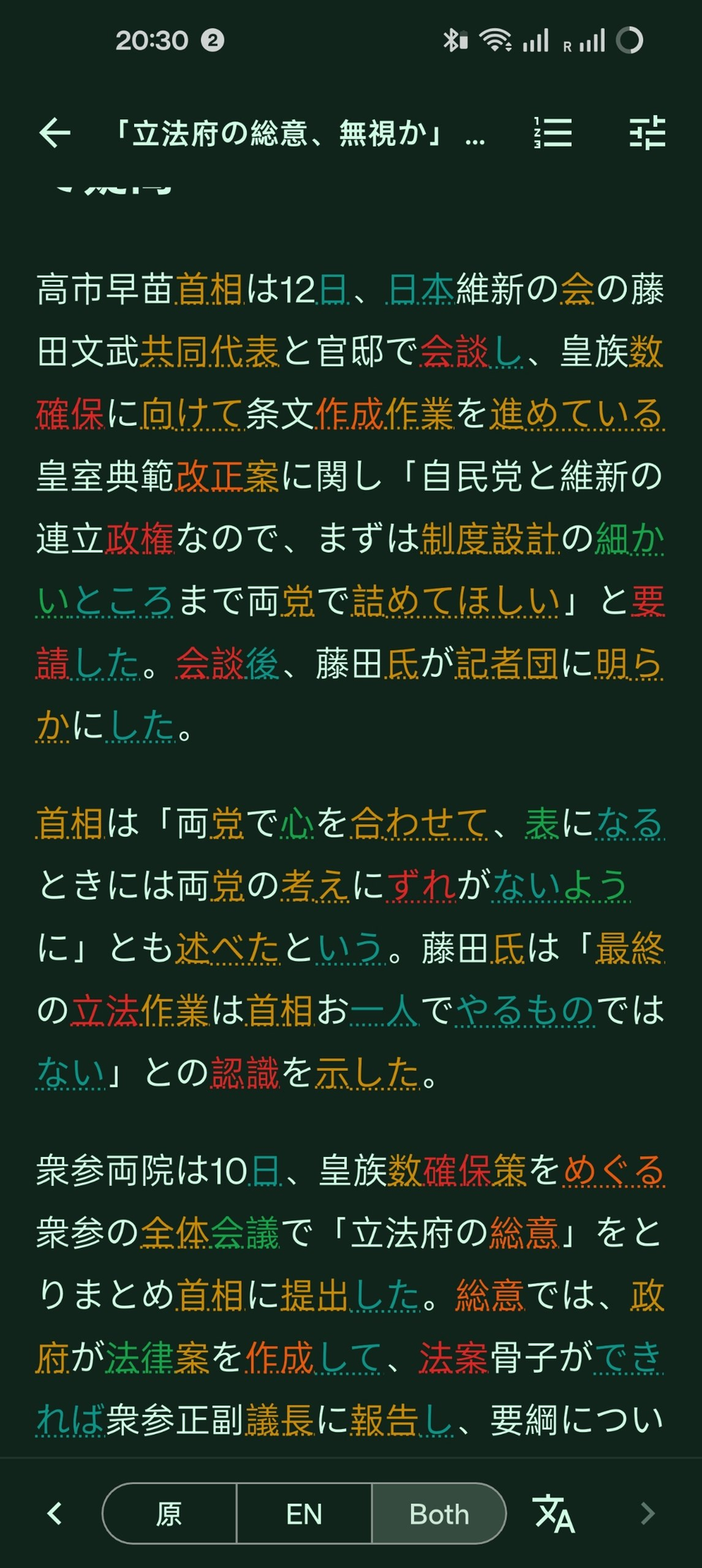
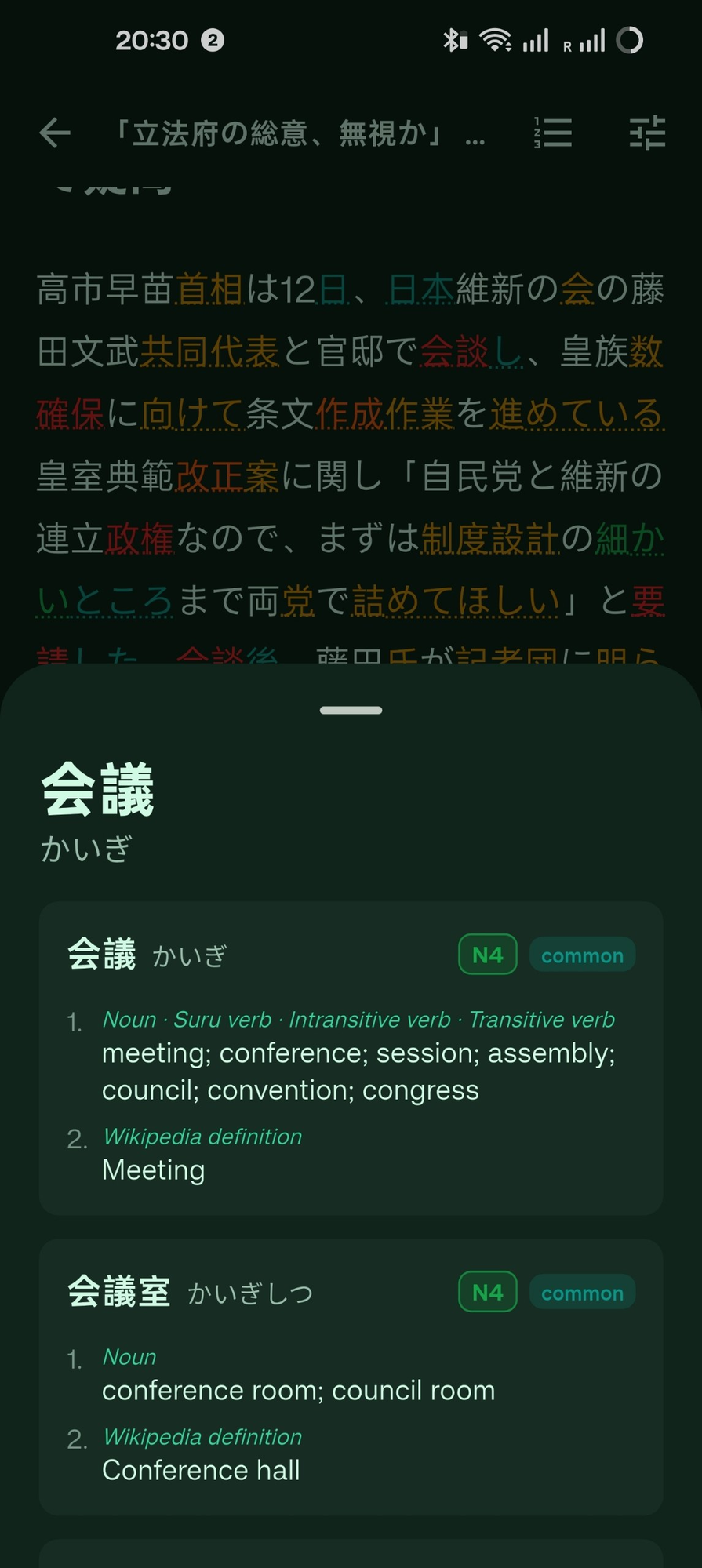
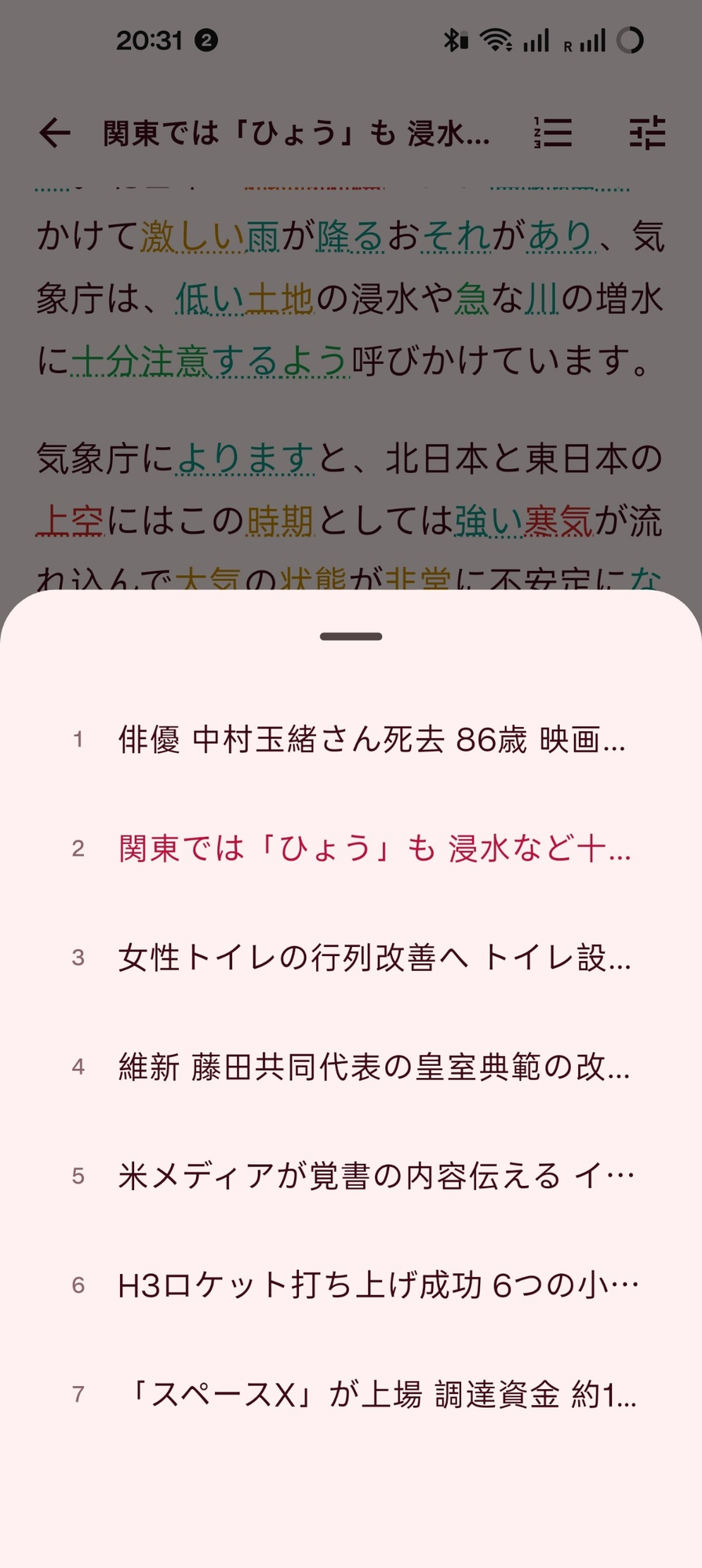
The core is an on-device NLP pipeline. MeCab tokenizes raw Japanese into words, each token gets JLPT-graded and underlined in its level colour, and tapping any word opens a JMdict entry with readings, senses and frequency tags. A paired-translation mode lines the original up against an English version paragraph by paragraph.
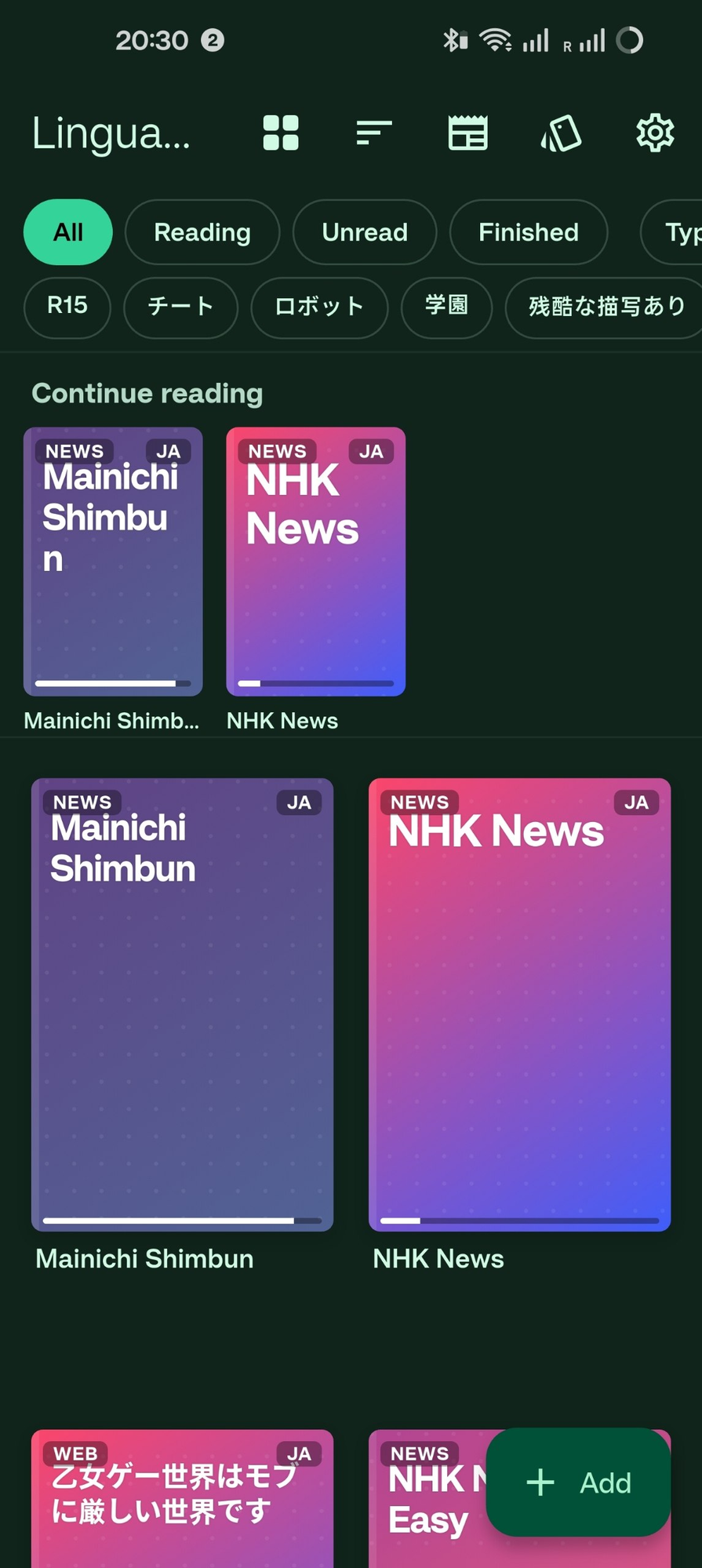
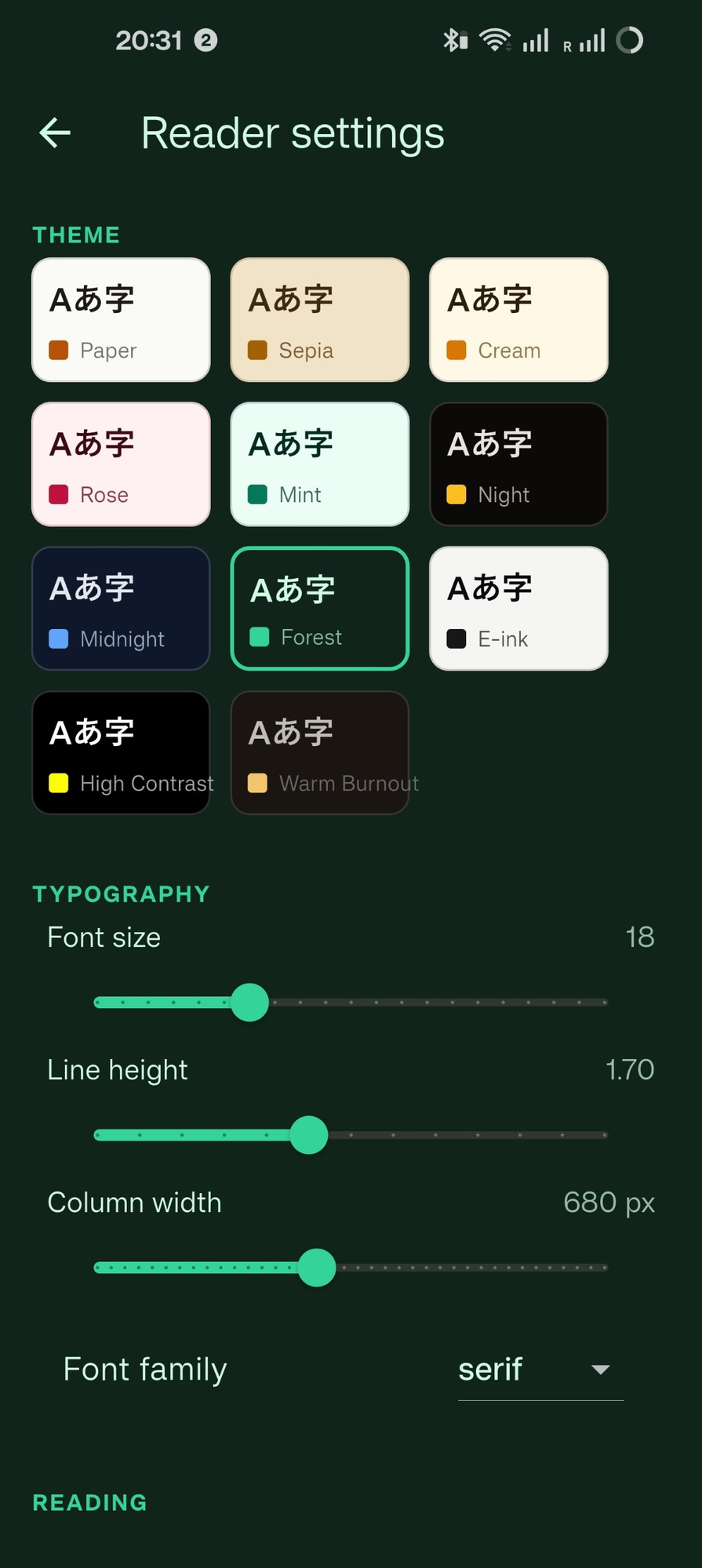
Around that sits a real reader: a library with progress, eleven typography-tuned themes, adjustable line height and column width, chapter navigation and text-to-speech. Everything persists locally. The app never phones home.
- 03
What was hard
Running MeCab, a native C++ tokenizer, inside a Flutter app across Android and desktop meant wrangling FFI, dictionary packaging and platform-specific builds.
Token-level colour coding also had to survive text selection, font scaling and line spacing without wrecking the reading flow. The underline treatment you see now came after several failed attempts at background highlighting.
What this means for your project
End-to-end product work in a hard domain: native NLP integration over FFI, offline-first architecture, and the hundreds of small reading-comfort decisions that separate a real product from a demo.